
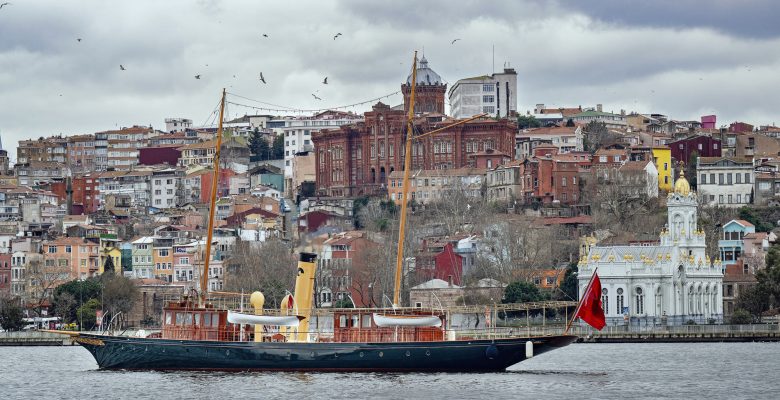
A century’s worth of exposure to salt water and the overall marine environment can take its toll. A newly completed restoration of the yacht Cangarda is the latest in ongoing efforts to preserve this significant piece of history.
The Delaware-based Pusey & Jones Corporation launched this steam yacht in 1901. Being one of the most impressive shipyards of its era helped bring more attention to the equally impressive yacht. She featured a long bowsprit that added 12 feet to her 126-foot length, for instance. Cangarda also had mahogany deckhouses, with Tiffany glass skylights. Below decks, a powerful steam engine, assisted by six further steam engines and all hand-fed coal by her crew, moved her through the water.
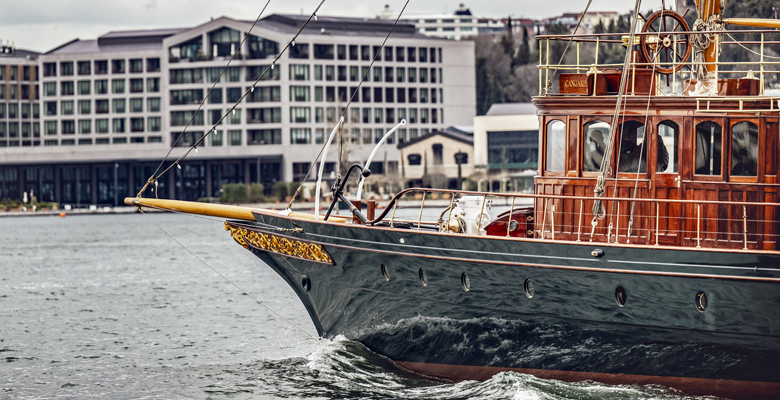
Although multiple owners enjoyed private cruises and lavish entertaining aboard, hard times befell her over the decades. A years-long restoration started in 1983 in Massachusetts but ceased toward the end of that decade when the owner became ill. The yacht sat for nearly another decade, sinking in Boston Harbor in 1999. Elizabeth Meyer, renowned for restoring the classic J-Class Endeavour, salvaged her and partially rebuilt her. Bob McNeil, a history lover and classic-boat enthusiast, bought her from Meyer in 2002 to finish the job. It took seven years, but Cangarda floated on her lines, most remarkably with her original steam engines. She was, and remains, the sole surviving steam yacht from an American shipyard.
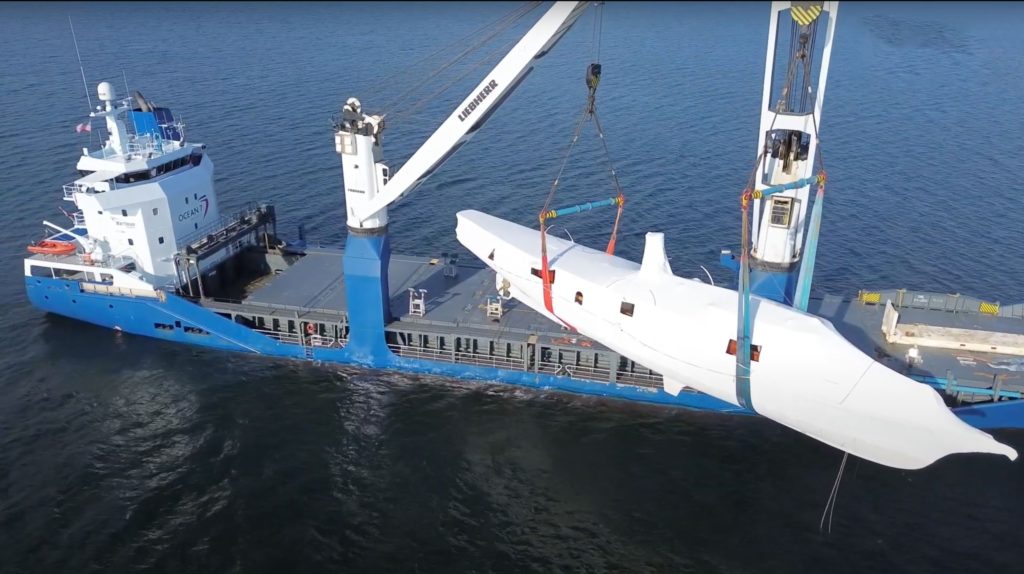
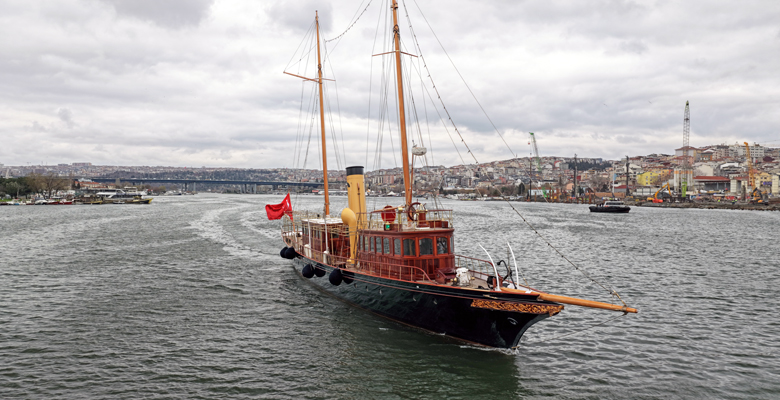
McNeil kept the 126-footer in Maine, having Front Street Shipyard take care of her each winter. When McNeil died in 2021, the yacht remained at the shipyard and then went up for sale. Rahmi Koç, a Turkish businessman, bought her in late 2024, transporting her from Front Street Shipyard to Turkey (below) to join his museum.
Shortly thereafter, the latest restoration of the yacht Cangarda began at RMK Yachts in Istanbul. “From the very beginning, we approached Cangarda not as a refit project, but as a responsibility toward global maritime heritage,” explains Cuneyt Okcu, RMK Yachts’ director. In fact, he says, the yard adopted “a museum-grade conservation mindset rather than a modernization approach.” This therefore meant preserving as much as possible, from wood paneling to brass and bronze fittings. It also meant reconstructing what was beyond repair, crucially respecting the original specifications. For example, detailed hull and superstructure inspections revealed repairs were needed for steel plates and the Cuban mahogany deckhouses. The same shapes as 1901 are present today. Further treatments from RMK Yachts’ craftspeople should keep these protected.
Of course, the latest restoration of the yacht Cangarda also addressed the seven steam engines. RMK Yachts solicited assistance from specialists, including engineers from Tüpraş. Tüpraş is Turkish energy firm and belongs to Koç Holding, the same parent company as the shipyard. Although the original configuration remains, some parts required rebuilding to meet modern safety and operational requirements. Despite this, according to the yard, the steam system is much like how it operated at launch.
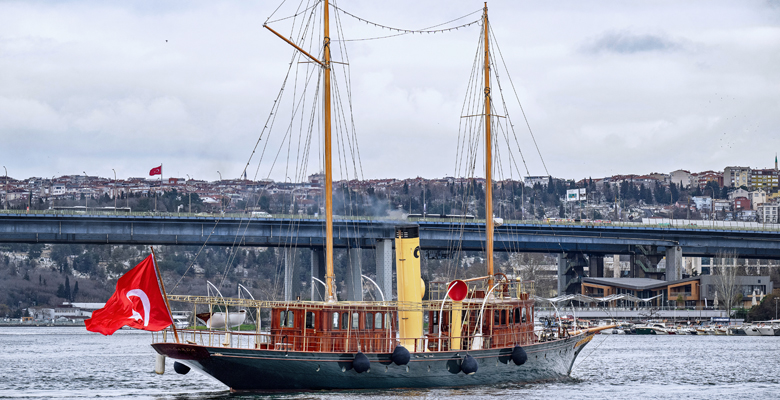
With original furnishings and other interior materials, Cangarda has returned to being a floating museum open to the public. She’s at Rahmi Koç Museum in Haliç, an industrial museum dedicated to the history of industry, transport, and engineering. Note, too, that a documentary tracing the yacht’s journey overseas and her restoration is in production, for release later this year.
RMK Yachts rmkyachts.com
More About the Yacht Cangarda
LOA: 126’0” (38.4 meters)
Beam: 17’6” (5.33 meters)
Draft: 7’9” (2.36 meters)
Guests: 9 in 4 staterooms
Engines: 1/300-hp Sullivan triple-expansion steam powerplant with 6/300-hp Davidson auxiliary steam powerplants
Sailplan: schooner
Builder: Pusey & Jones
Stylist: H.C. Wintringham
Naval Architect: H.C. Wintringham Interior Designer: original designer unknown






Leave a Reply