
 ALL PHOTOS: JIM RAYCROFT
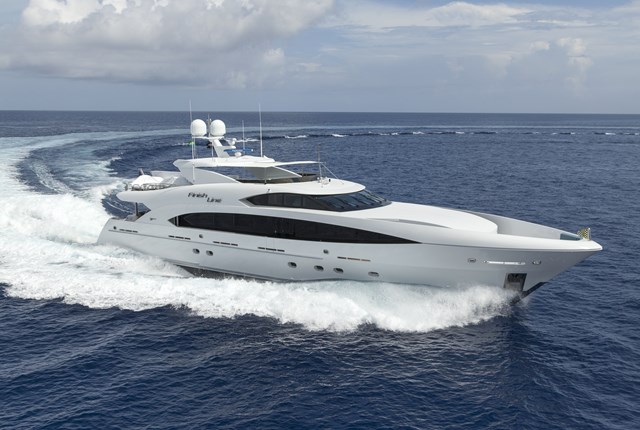
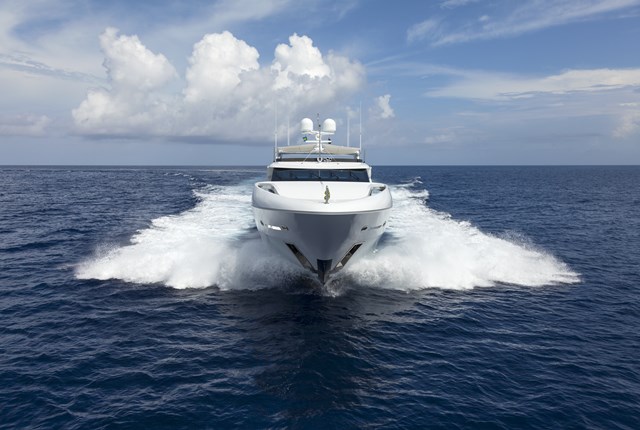
In case her name doesn’t clue you in, Finish Line, a 120’7” (36.8-meter) built by Trinity Yachts, was conceived for speed. Performance in the low-20-knot range was a must for her American owner. So, too, was shallow draft for cruising the Bahamas all summer long. Equally important, Finish Line was meant to be made in the USA. Just as her owner insisted on performance parameters, he insisted on proving his standards could be met stateside.
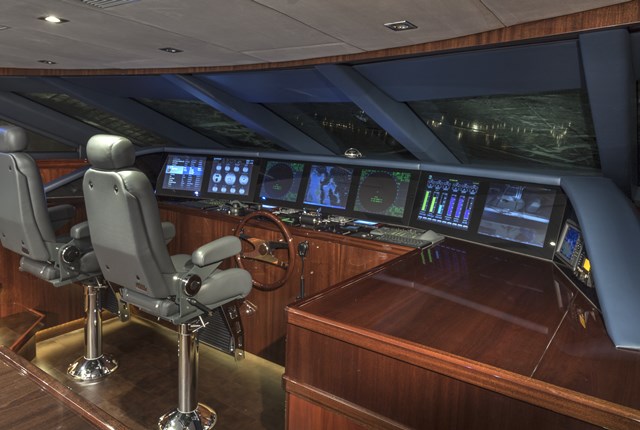
Finish Line is powered by twin 2,600-hp MTU 16V 2000 M94 diesels. Trinity Yachts recommended the package to the owner and Billy Lockhart, the yacht’s captain and project manager. Why? The engines pack a punch in a smaller footprint than some other engine manufacturers’ offerings. Trinity Yachts averred that Finish Line would therefore see a 23-knot maximum speed. Lockhart confirms it, adding that Finish Line has also exceeded the speed by one knot. That performance has served the megayacht well, made even more thrilling in the skinny waters of the Bahamas. Finish Line draws 5’6” (1.7 meters).
Lockhart says that Trinity Yachts delivered Finish Line on budget and to the owner’s exacting standards. “We’re a no-compromise operation,” he says. Something they’re quite pleased with is the exhaust system. It’s designed by George von Widmann of Von’Widmann Designs. Typically, exhaust gas exits through the engine-room sole after being cooled. Aboard Finish Line, the gases route a bit more first. They pass through the engine-room bulkhead into the lazarette and then the steering compartment, into expansion boxes integral to the hull. That’s when they exit the hull at the transom. The result? No backpressure issues, plus practically no soot on the transom, Lockhart says.
While other custom megayacht yards could have built Finish Line, “It was very important for us to build in the U.S.,” Lockhart explains, and for Finish Line to fly the American flag off her transom. “In a time in history where everybody believes that absolutely nothing is built in America anymore, and that America doesn’t manufacture anything anymore, this boat is such a wonderful testament to the ability of American manufacturing,” Lockhart says. “Everything about this boat is U.S. made.” That includes the interior, completely made by Trinity’s cabinet shop.
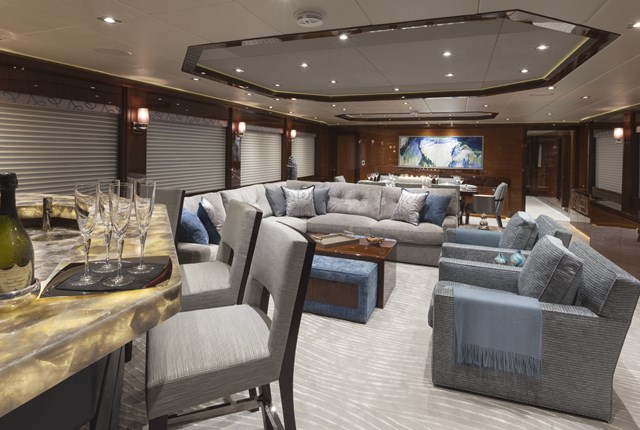
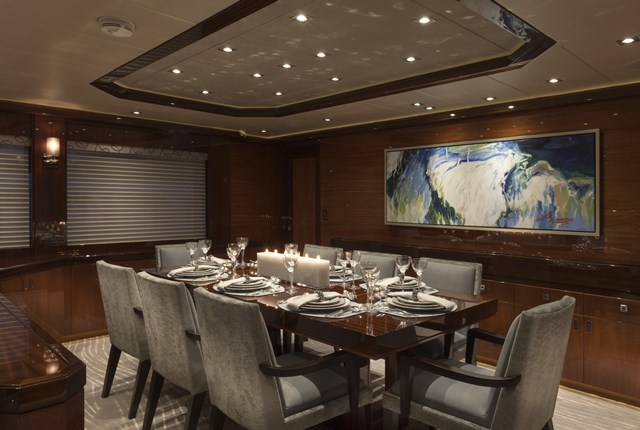
Sapele wood, both light- and dark-stained, is found aboard Finish Line. The owner wanted dramatic elements throughout the megayacht, too. That’s why the sapele grains alternate horizontally and vertically, and why polished stainless steel serves as inlays. Joanne Lockhart of interior-design firm Yacht Next further had the quartzite-topped bar backlit.
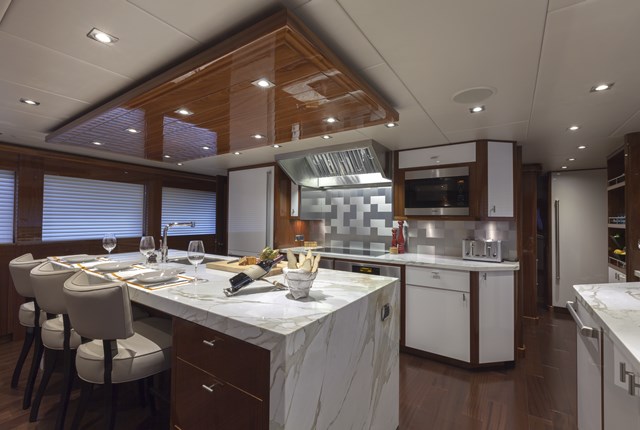
Even the galley aboard Finish Line is a showplace. “He’s a huge foodie,” Joanne Lockhart says of the owner. The galley therefore is as much a social space for him to entertain and even cook for family as it is a crew workspace. Note the marble-topped prep/dining area. Though not visible, the wine fridge has a custom front complementing the design of the marble and glass sole leading into the galley.
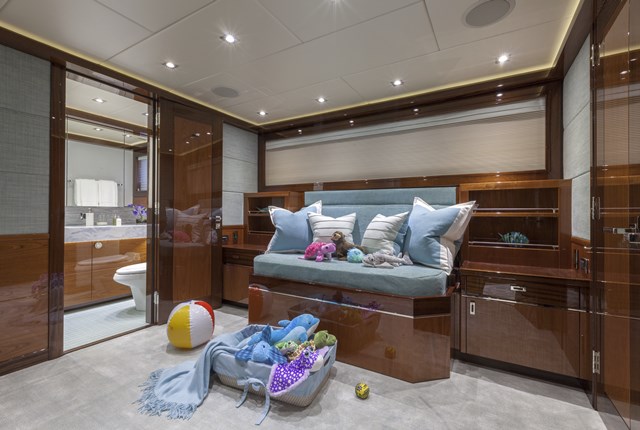
Finish Line is very much a family boat. Therefore, the owner wanted a playroom for toddlers among the four guest staterooms. Yacht Next designed and made a twin berth that converts into this configuration. The remaining three staterooms have queen beds, for adults.

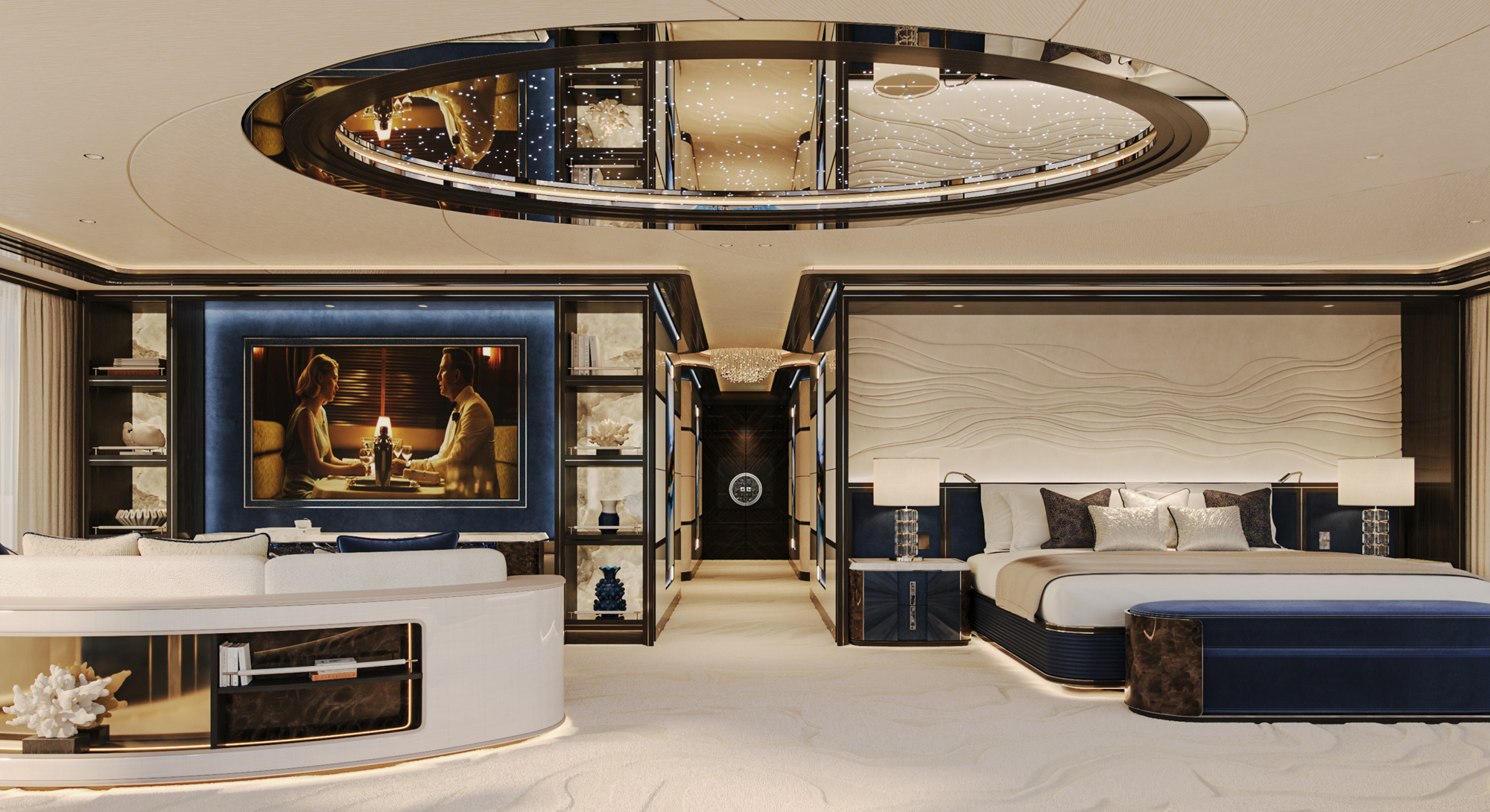
As for the master stateroom, the owner wanted a walk-in wardrobe unlike most. Joanne Lockhart says the directive was to mimic the men’s department at Barneys. Also different: one en suite bath, not separate his and her areas, occupying the entire beam (26’2”, or 8 meters).
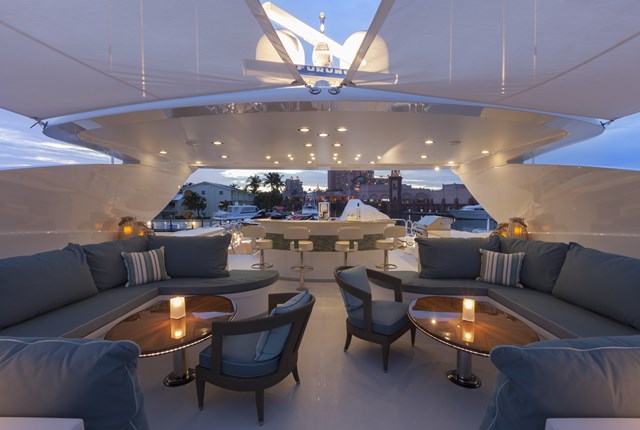
From her raised-pilothouse styling to her relaxation spaces, Finish Line has her owner’s imprint. “We got everything the way we wanted it, how we wanted it, and when we wanted it,” Billy Lockhart says. In a time when 120-footers are increasingly production-built, not custom, and when American manufacturing in general has taken a hit, it’s a welcome sign.



Kim Clem
We were amazed how beautiful Finish Line was when you went by the house in Stonington. ????????