
Editor’s note: The following is the first in a three-part series about how megayachts have evolved from discretionary lifestyle expenditures into complex, high-value assets. The author, Dominique Gruber, has decades of experience advising UHNWIs in managing yachts, estates, jets, and art. That experience led to the realization that superyacht asset management has been late to mature. Many owners and family offices are reassessing how they structure and oversee their boats. Simultaneously, they’re evaluating how to integrate them into their broader wealth portfolios. Here, Gruber explores the resulting governance gap and the growing importance of a professional yacht owner’s representative. Altogether, more disciplined, enterprise-style superyacht asset management is reshaping ownership.
Even meaningful careers only truly make sense through the lens of hindsight. The same is often true of young industries. Superyachting is no exception.
I entered the megayacht industry in the early 1990s, when it was still defining its contours. Lürssen had just delivered what was then the largest yacht ever built. The sector was accelerating rapidly, driven by ambition, engineering prowess, and a new class of global wealth. My entry point was unconventional, through a Saudi prince and government minister. Exposure to some of the most rigorously structured segments of the global luxury industry, not yachting tradition, shaped his expectations. That’s where my background came into play. I had experience with luxury operations, hospitality culture, and private-sector environments rooted in governance rather than just glamor.
Over the following decades, I served as chief of staff for family offices. As such, I managed portfolios of megayachts, aircraft, estates, and other non-financial private equity. These were complex holdings whose value depended as much on stewardship as on acquisition. I advised principals whose lifestyles required the same discipline, foresight, and risk control as their financial investments.
What I observe today is a widening, and increasingly problematic, gap. The value of floating assets has risen dramatically, yet the quality of superyacht asset management has not.

The Governance Gap
First, it’s important to understand how the megayacht industry was born. In its early decades, ultra-high-net-worth capital flowed into yachting in a profoundly emotional manner. Wealth deployed primarily as an expression of freedom, success, and personal vision. Simultaneously, construction programs often lacked definition, disputes recurred, and tolerance absorbed cost overruns. The resilience of major shipyards with technical discipline and institutional memory ultimately ensured yachts reached delivery. Compared to other luxury segments like aviation or any well-run enterprise, something essential was missing. Elsewhere, capital deployed against objectives, milestones, and operational accountability. Assets sat within a broader family office and patrimonial framework. This discipline remained largely absent from megayachting for many years.
Despite their sophistication, many family offices still treat yachts as peripheral “life management assets,” alongside residences, staff, or travel logistics. The terminology itself suggests convenience, or discretionary spending. A modern megayacht, however, is a highly complex, depreciating private-equity asset. It has a multi-year capital expenditure cycle, layered regulatory exposure, significant operational risk, and non-trivial reputational implications. Its risk profile is closer to that of a mid-sized privately held company.
Yet, governance remains fragmented, often delegated to a patchwork of brokers, project managers, and captains. Improvised decisions, diffused accountability, drifting costs, and quietly eroding value can result. It’s not due to the failure of intelligence or intent. Instead, structural lag is to blame.
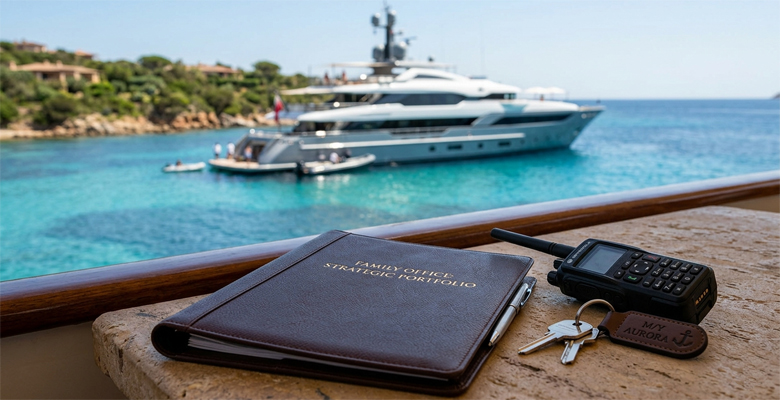
The Owner’s Representative as Strategic Safeguard
This evolution brings renewed focus to a role that remains widely misunderstood: the owner’s representative. A group of experienced owner’s representatives and shipyard project managers joined forces with the Superyacht Builders Association (SYBAss and the International Association of Maritime Institutions (IAMI) to create formal training. Namely, it’s the Yacht Owner Representative Program (YORP). Individuals who successfully complete YORP are listed in a searchable registry as well.
Appointing a qualified owner’s representative before signing a contract can significantly improve outcomes. It can save tens of millions, for example, through early contractual clarity, accurate technical compliance, and disciplined decision chains. More importantly, it establishes balance between emotion and authority, and between ambition and feasibility.
Superyacht asset management needs to begin before contract signing for more reasons, too. It inserts operational realism, including lifecycle costs, for instance. Overall, it assures integrity from concept to delivery. The finished yacht doesn’t merely reflect the owner’s aspirations. It must operate properly, adhere to regulations, and keep long-term value. This earns a yacht a place within a broader family office governance framework, including resale or succession considerations.

From Lifestyle Object to Governed Asset
All the work I currently undertake for new builds and multiple family offices, including as a YORP enrollee, focuses on validating this role. It also places the role where it belongs: at the intersection of yachting, family-office governance, and strategic asset management.
Applying the disciplines of a well-run enterprise to a yacht doesn’t add bureaucracy. It’s about reducing friction, protecting capital, and aligning complex human and technical systems around a clear fiduciary mandate. For the next generation of yacht owners, superyacht asset management may become the most valuable asset.





Leave a Reply