
Editor’s note: This is the second article in a series by Dominique Gruber. His decades of experience advising UHNWIs in managing yachts, estates, jets, and art reveal that most family offices currently lack proper structuring to oversee them. Megayachts have evolved from discretionary lifestyle expenditures into multi-faceted, high-value assets, benefitting from the guidance of a yacht owner’s representative. Part one in the series reveals how family offices need stronger governance for superyacht asset management. Here, he highlights why assuming some decisions are simple to settle actually can become errors of omission, in more ways than one. Importantly, he highlights how to avoid sending the entire buying and ownership experience off track.
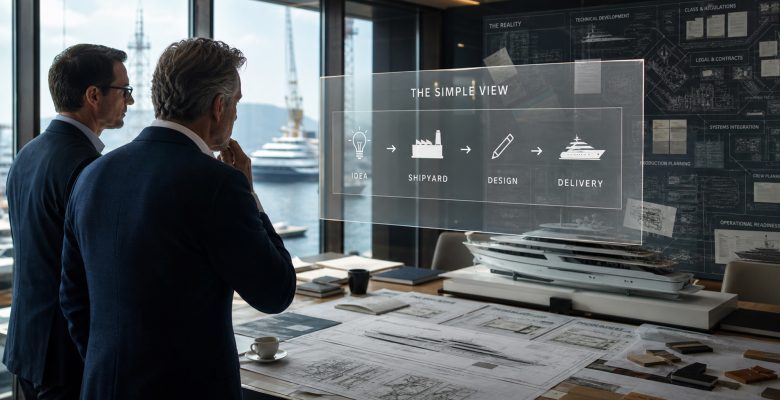
Many UHNW individuals believe building and buying a superyacht follows a relatively linear path: an idea, a shipyard, a design, a delivery. In reality, it involves a far more complex chain of decisions. In addition, they make some of these decisions too quickly, independently of the others, and without clarified intent. An owner’s representative involved from the earliest stages of consideration avoids blind spots and mistakes. More controlled measures gradually replace the illusion of simplicity.
The Foundational Question
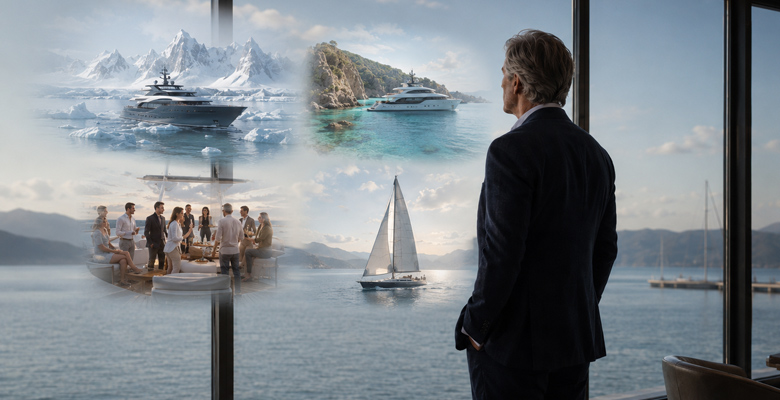
One of the most common blind spots lies at the very beginning: the lack of a structured purpose. Is the yacht an explorer that will prioritize autonomy and global navigation, for instance? A yacht for charter, to drive revenue? A family yacht primarily cruising the Mediterranean? A performance-oriented sailing yacht? Or perhaps a vessel for slower, more contemplative travel after a life of intense work?
Rather than being merely aesthetic variations, these are foundational elements. They influence the entire lifecycle of the yacht, from design and engineering to crew size, regulatory exposure, operational costs, and, above all, the quality of onboard life and culture. They even impact eventual resale value. Too often, these questions are addressed implicitly or too late, without the right person defending the owner’s interests. The discrepancies become too difficult and too costly to correct. Yachts become over-specified for their actual use, for example, or can’t fully deliver the expected experience. Crew structures poorly align with the owner’s lifestyle. The anticipated operational costs don’t match real usage.
Connecting the Dots
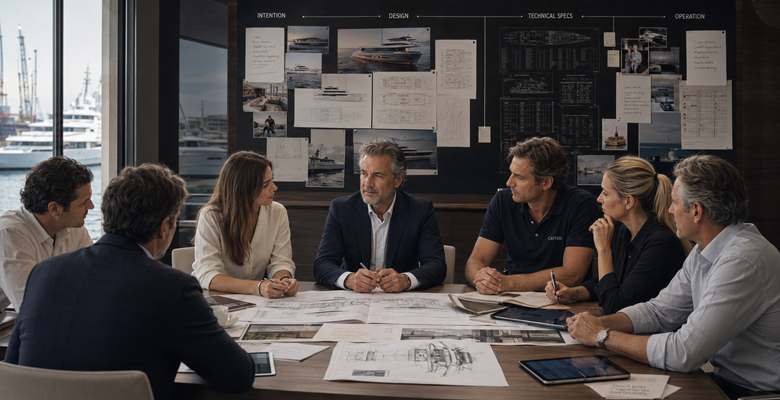
These situations rarely result from a single poor decision. Mostly, they stem from a lack of continuity between successive decisions, starting with the initial emotional dream through to managing the yacht in a more analytical framework, sometimes within a family office. This is precisely where an owner’s representative is most valuable, connecting intention, experience, and asset governance.
Building and buying a superyacht unites many highly qualified stakeholders: shipyards, designers, naval architects, lawyers, flag and class specialists, crew, and more. Each operates within their own field of excellence, similarly to how various professionals contribute to a company’s success. No company would operate without a CEO to ensure alignment, of course. Yet, owners buying a superyacht often overlook the need to coordinate competencies. The owner’s representative handles this discreetly. He or she advocates for the owner’s interests throughout the process. Additionally, he or she ensures that the initial idea translates coherently into design choices, contractual decisions, technical specifications, and, ultimately, operational reality.

The Reality Behind Delivery
A common misconception when building and buying a superyacht is that the most critical phase ends with delivery. In reality, delivery marks a transition, from a controlled construction environment or a brokerage acquisition to a living, regulated, and human system. This dimension brings its own challenges: crew dynamics and retention, maintenance and refit cycles, compliance across jurisdictions, cost control, quality of life onboard, and the harmony of the experience. Without continuity between the initial vision and these operational realities, the experience—and the yacht itself—can drift.
At a certain scale, this reality becomes particularly noticeable. If an owner has a fleet or a yacht exceeding 492 feet (150 meters), the onboard teams can total 80 people. Suddenly, they own something more like a floating boutique hotel. Consider, too, if the yacht or the fleet engages in scientific expeditions. In this case, the demands of an even more complex organization apply. And like any organization, performance depends on how well every aspect aligns over time.

The Question of Cost and Time
Generally speaking, annual operating costs are about 10 percent of a yacht’s value. Although this seems like pretty simple math, there’s more to it. Remember, an owner’s early choices for intended use, design, technical complexity, and level of service strongly determine financial outlay. Therefore, value isn’t defined solely at the point of signing the contract. In fact, without initial proper planning, operating costs can exceed the initial construction costs over a 10- to 15-year period. Revenue sources do exist, of course, notably charter. However, owners need to integrate them coherently from the outset.
In the end, UHNW individuals interested in superyachts should keep one word in mind: continuity. This is what allows the dream to evolve from a complex acquisition into a sustainable asset, fully aligned with its reason for being. Well after delivery, too, the yacht becomes part of a broader patrimonial ecosystem. Governance, family use, and cost discipline begin to matter as much as design, comfort, and performance. This in turn begs a question: How can a yacht transform from a status symbol into a well-managed asset within a long-term legacy and wealth-transfer strategy?
You’ll find out in our last article in this series:



Leave a Reply