
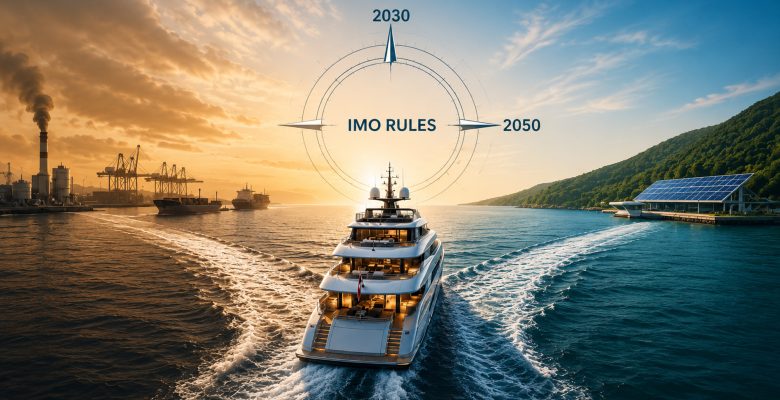
Yacht sustainability is no longer a marketing buzzword. It is simultaneously a compliance issue and a design brief. On the latest episode of The Yacht Law Podcast, we explain how the International Maritime Organization (IMO) regulations shape superyacht innovation. The influence of the IMO rules is especially present in the long road toward greenhouse-gas- emissions cuts and a net-zero goal.
Owners, family offices, and especially first-time buyers may assume they only need to follow their flagging country’s regulations. However, yacht operations sit inside a global framework of treaties and standards. That reality is why builders are planning years ahead instead of retrofitting after delivery. It’s also why the “future-proof” yacht now includes an environmental strategy alongside aesthetics and performance.

The IMO is a United Nations agency creating change through international treaties that member nations adopt into domestic law. That sounds abstract until you connect it to the rules governing every megayacht project. Namely, they are SOLAS (Safety of Life at Sea), STCW (Standards of Training, Certification and Watchkeeping), and MARPOL (pollution prevention). These standards influence everything from safety equipment and crew qualifications to how vessels are marked, classed, inspected, and manned. Importantly for yacht owners, superyachts aren’t excluded or “special” just because they’re private or beautiful. Regulators often start with big, multi-thousand-gross-ton commercial thresholds, moving down the volume range over time.
Environmental compliance is where that broadening scale is most visible. Our podcast conversation highlights the IMO rules’ 2030 and 2050 deadlines. By 2030, a meaningful share of shipping energy will need to come from zero-emission or near-zero emission solutions. Again, although the IMO rules specify “shipping,” they include all vessels. The emissions pathways can include biofuels, hydrogen fuel cells, methane-based options, and other alternatives. That pressure helps explain why we see headline projects from major yards. The yacht Nausicaä is one recent delivery, for instance, featuring hydrogen fuel cell readiness. Multiple builders and owners are employing other technologies, too, such as solar support systems and hydrogeneration. The hard truth, though, is that infrastructure can be the limiting factor. A yacht can be engineered for hydrogen, for instance, but if global bunkering and supply chains aren’t mature, operational reality lags.
The details matter, because “clean” isn’t automatic. Take hydrogen, for example. A specific category called “green hydrogen” exists, referring to hydrogen resulting from methods avoiding the unintended consequences of high-emission production. A similar distinction applies to hybrid propulsion: Diesel-electric systems aren’t inherently better in every use case. This is where the industry wrestles with greenwashing and “blue washing,” big claims that collapse under scrutiny. Innovation is real, but so, too, are trade-offs.
Representation at the rule-making table further matters. SYBAss, a trade association of major superyacht builders, maintains a consultative relationship with the IMO. This ensures that the superyacht sector has a voice when regulators draft one-size-fits-all requirements. As IMO rules tighten and new frontiers emerge, owners and builders need both technical solutions and regulatory awareness even more.

Share this episode with a colleague, and subscribe to The Yacht Law Podcast for free via Apple Podcasts, Spotify, Amazon Music, or your favorite streaming platform.
Share your opinion, too: Are the IMO rules moving toward net-zero emissions possible for yachting? Should yachts get their own standards?





Leave a Reply