
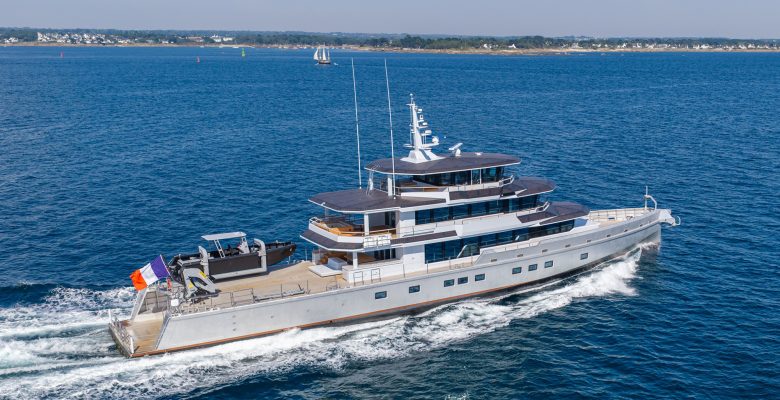
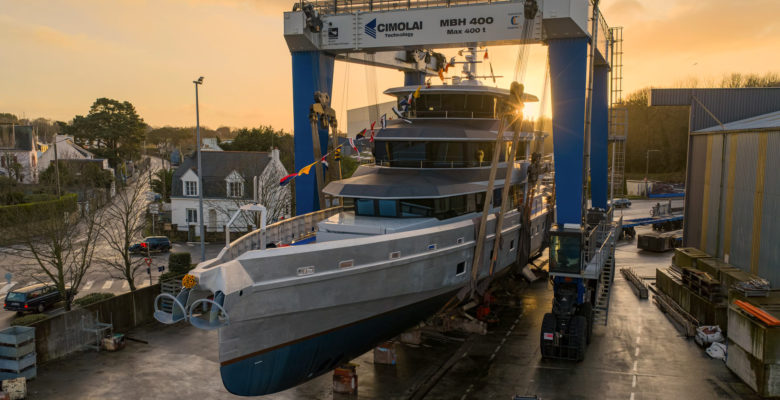
An owner with a laser focus on crisscrossing the world’s oceans and leaving a small footprint is on his maiden voyage. The yacht Canoa recently departed JFA Yachts, looking every bit the intrepid explorer and engineered with matching mettle.
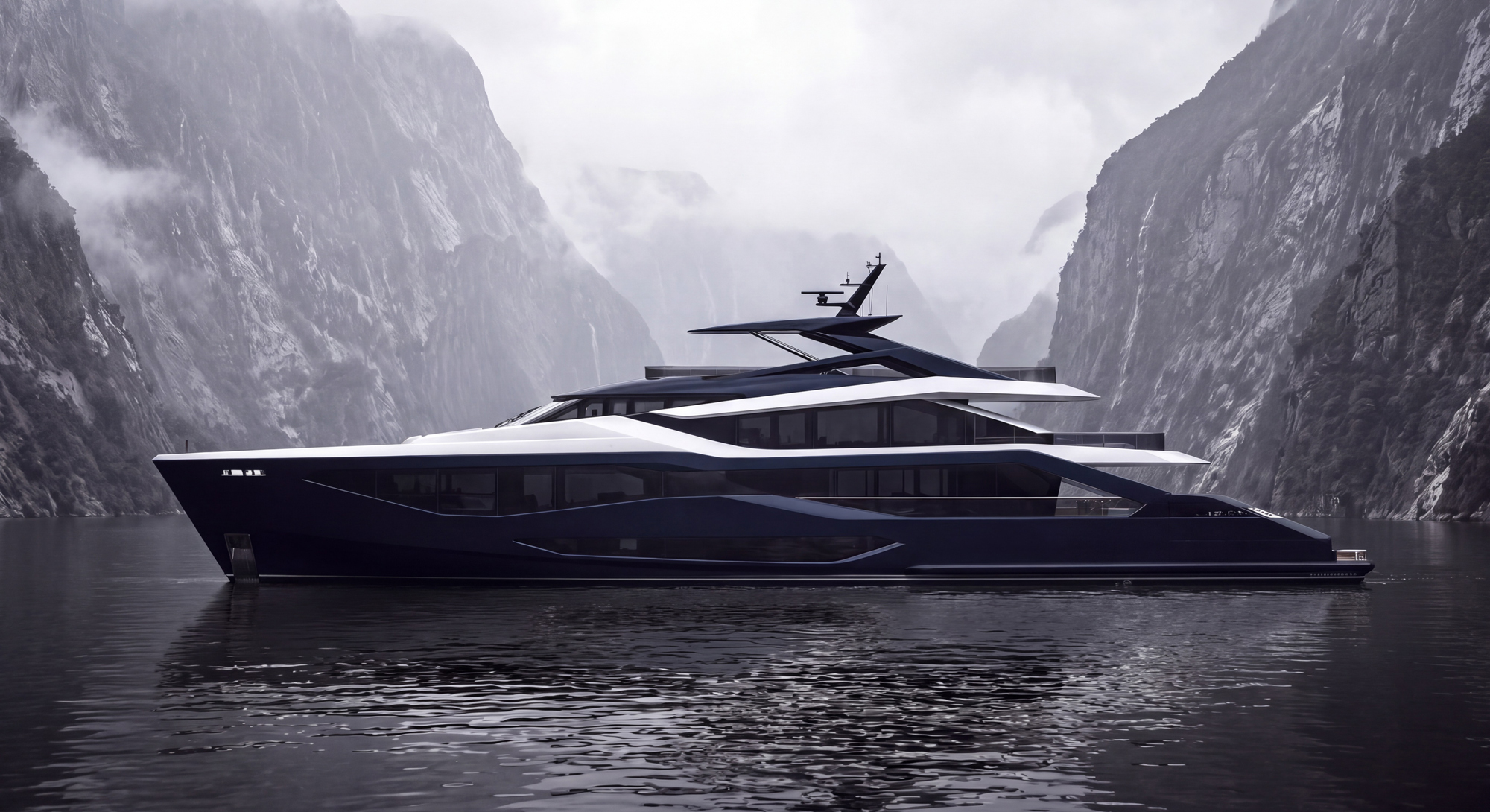
At 164 feet (50 meters), this ambitious and technically complex explorer yacht is the largest in the French shipyard’s history. Strong, taut lines highlight her four decks and lend her a distinctive profile. They complement the naval architecture and engineering from Humphreys Yacht Design, equally meant to set her apart. “Our ambition from the outset was to create an Explorer yacht that combines genuine long-range capability with exceptional efficiency, refined seakeeping and a distinctive exterior that reflects her capabilities,” explains Tom Humphreys, managing director for Humphreys Yacht Design. “By developing the naval architecture and exterior design together from day one, we were able to optimize every aspect of the yacht as a cohesive whole.”

That whole starts with a highly unusual but not-unheard-of aluminum hull and composite superstructure. Benefits of this approach include less weight aloft, for instance, a lower center of gravity and therefore better stability, and lower fuel burn. They further result in more comfort while cruising and at anchor. (Augmenting comfort, the yacht Canoa has both fin and gyroscopic stabilizers.) The hull design is a fast-displacement form, too, so it should be efficient throughout the entire speed range. According to JFA Yachts, the superyacht will enjoy an extensive 5,000-nautical-mile range at 12 knots.
The owner placed a particular priority on efficiency and reducing the yacht’s environmental footprint. This explains why the yacht Canoa has twin MTUs in parallel with electric motors. When repositioning the yacht at low speeds, for example, or entering and exiting harbors, the captain can rely on just the electric motors. Transatlantic voyages, meanwhile, will see the MTUs press into service. A high-capacity battery bank and solar panels additionally reduce reliance on fuel for onboard systems, also keeping her independent from shore for long periods. Plus, a Dynamic Positioning System maintains her position without needing an anchor, especially helpful in sensitive marine areas.

Although images aren’t available, the interiors of the four decks emphasize feeling connected to the great outdoors. Natural light and expanses of windows emphasize a sense of volume as well. The owner collaborated closely with m²atelier to ensure his crystal-clear vision came through for a cruising party of 10.
“The delivery of Canoa represents the culmination of several years of work and an exceptionally ambitious project,” notes Frédéric Jaouen, JFA Yachts’ president. He’s confident the owner has received exactly what he wanted: “a true explorer yacht capable of travelling far, for long periods, and in outstanding comfort, while incorporating innovative solutions to improve energy efficiency.”

Humphreys agrees. “Seeing the sea trial results so closely match our design predictions has been particularly rewarding,” he says.
Humphreys Yacht Design humphreysdesign.com
JFA Yachts jfa-yachts.com
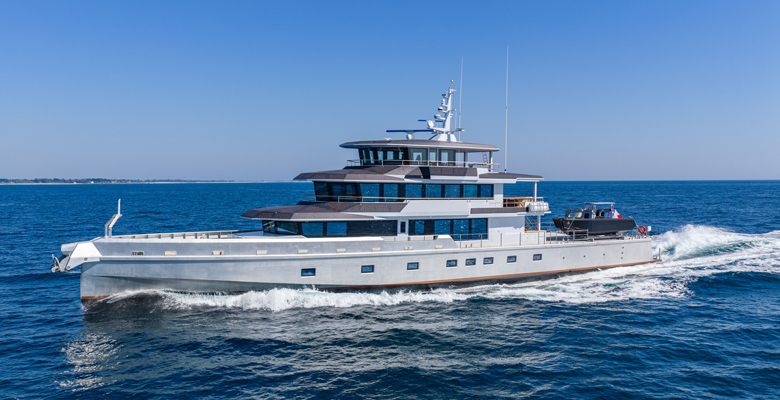
More About the Yacht Canoa
LOA: 163’10” (49.95 meters)
Beam: 29’9” (9.1 meters)
Draft: 6’6” (2 meters)
Guests: 10 in 5 staterooms
Engines: 2/1,450-hp MTUs w/electric motors
Range: 5,000 nautical miles at 12 knots
Builder: JFA Yachts
Stylist: Humphreys Yacht Design
Naval Architect: Humphreys Yacht Design
Interior Designer: m²atelier




Leave a Reply