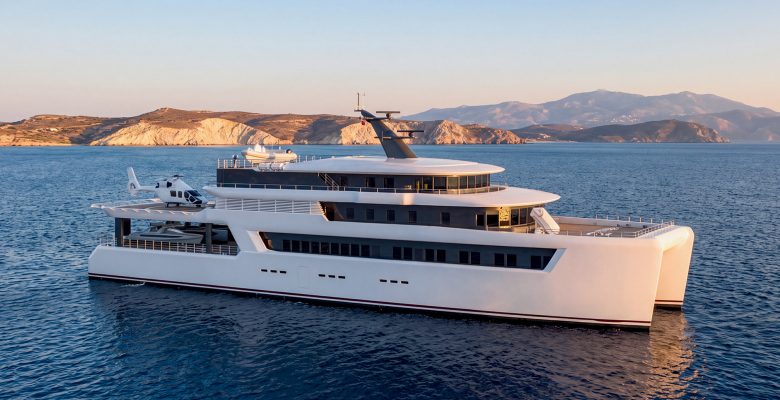
Owners who put “explore” in “explorer” have been loyal clients of ShadowCat and its support yachts since its inception. There’s just one problem, in a good way. They keep exploring, putting what the build team says are tens of thousands of miles under their hulls each year. This means the yachts aren’t available for charter, seeing at a yacht show, or for resale. Simultaneously, some would-be clients don’t like the long timeline that comes with building a custom project. For those who still want a support yacht engineered for demanding itineraries yet a shortened waiting, the ShadowCat Foundation Series is a first. It’s a limited-edition family of build-ready megayacht models designed around experiences that owners like to pursue.
“Today’s owners value certainty as much as capability,” notes Jennifer Smith, ShadowCat’s commercial director. This, she continues, means proven reliability as much as a dependable delivery date. To that point, because more owners are getting comfortable with pursuing bold cruising plans, they’re seeking “the confidence that comes from a mature platform.” And, of course, they still want their support yachts to reflect their individuality, whether it’s for handling an abundance of large tenders or for extra crew and guests.
The ShadowCat Foundation Series addresses these in several ways. Firstly, each model employs the catamaran design underpinning its other world travelers. These include the yachts Wayfinder and Hodor. The cat platform means stronger stability across broad beams—46 to 51 feet (14 to 15.5 meters), depending on the model. Similarly, ShadowCat engineers each catamaran for tender launch and retrieval in sea states that some yachts avoid. The twin hulls also have relatively shallow drafts even with each of the series yachts being 220 feet (67 meters) LOA.
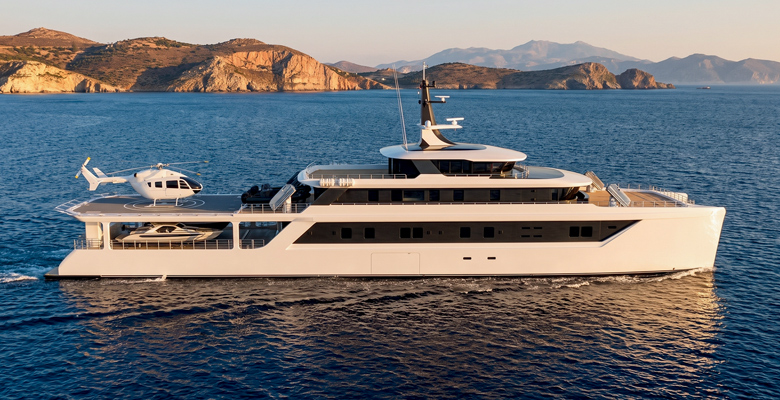
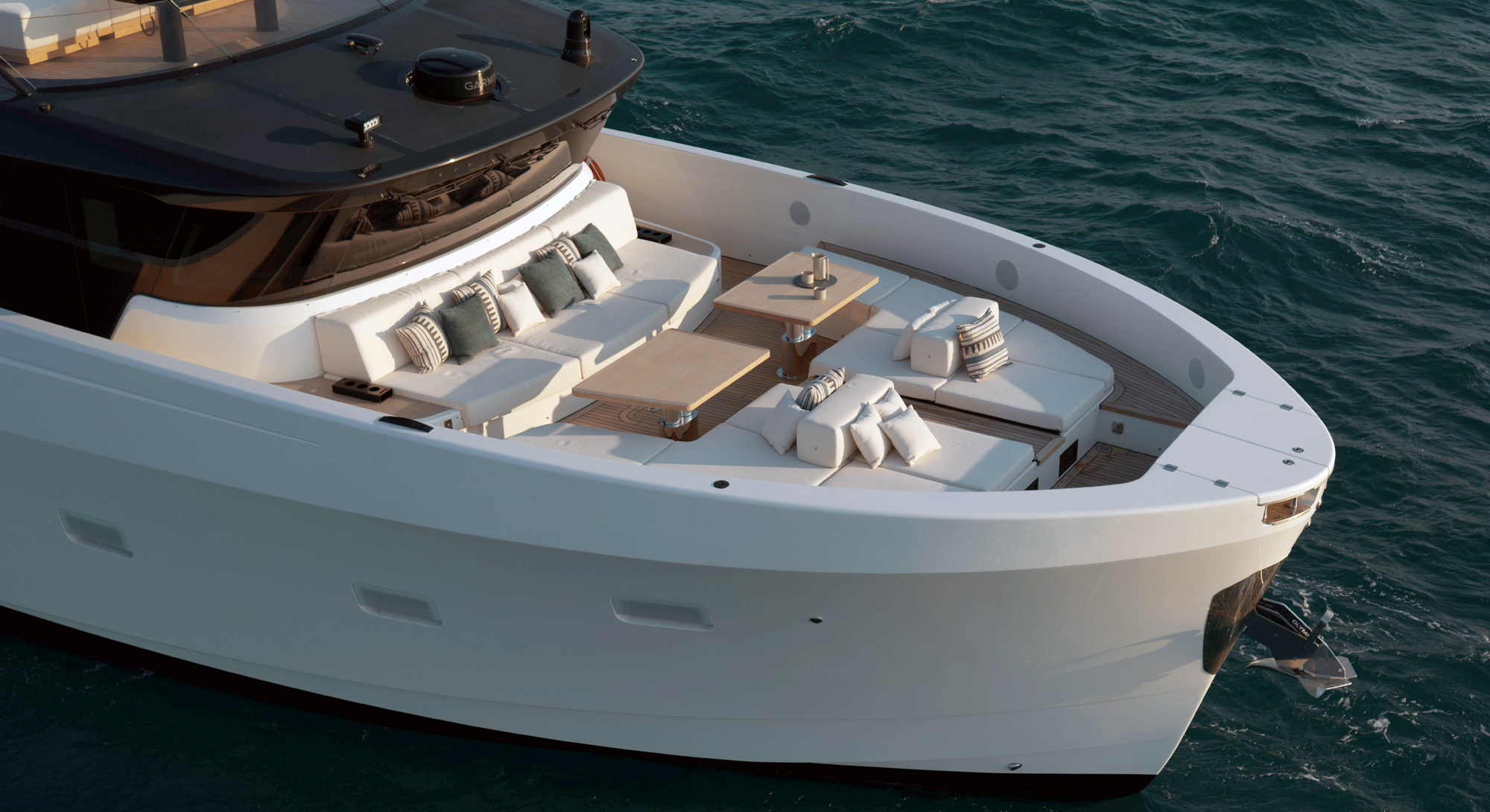
The three models in the series are Basecamp (above), Waypoint (below), and Altitude (top). Although they share other advantages like certified helicopter landing decks, each aviation profile varies. For example, Altitude revolves significantly around heli ops, with a fully enclosed hangar in addition to the helideck. The crew can move the helicopter directly into the hangar without removing the blades, too. This suits those owners who view aerial experiences as vital parts of global exploration. It additionally makes maintenance easier for the crew. Coming in at approximately 2,100 gross tons, Altitude is the most voluminous of the three.
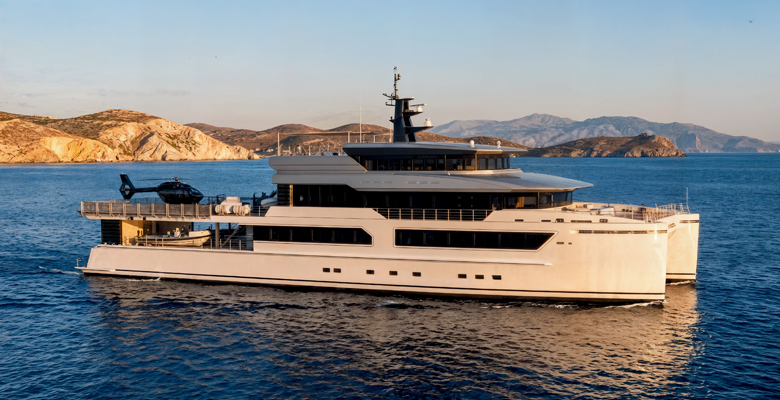
Waypoint, meanwhile, also has a hangar, but for stowing the helicopter after removing the blades. She’s also more of the middle-ground ShadowCat Foundation Series model, balancing aviation and water adventures. This can include dive tenders, beach landers, and rugged-duty RIBs. Lastly, Basecamp should appeal to buyers who want the capacity for big tenders and toys along with scientific or expedition guides, family and friends, and related mission gear. Waypoint and Basecamp are less voluminous than Altitude but more than accommodating at around 1,700 gross tons.
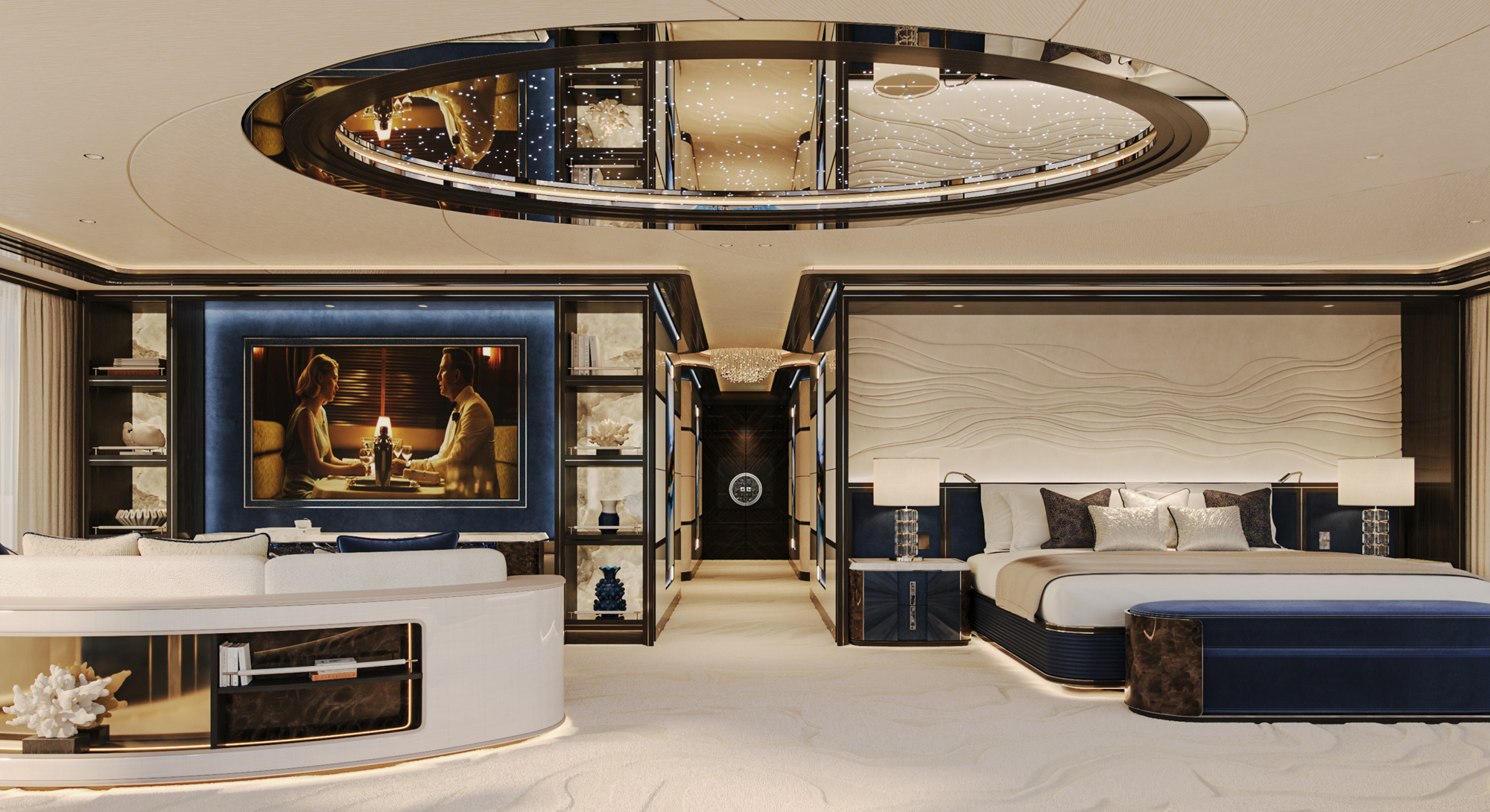
Just as important, the ShadowCat Foundation Series is, according to the company, comprehensively priced. Although the superyacht designs are semi-custom, they’re not base models in need of abundant add-ons to suit their intentions. Cost calculations are inclusive of interiors (for 35 total people, including crew), main machinery, systems, and principal equipment. The extras therefore are activity-specific. Even with the client-chosen, mission-driven amenities, ShadowCat says delivery should be within 20 months.
Build slots for the ShadowCat Foundation Series open during next week’s Monaco Yacht Show.
Shadowcat Foundation Series theshadowcat.com



Leave a Reply