
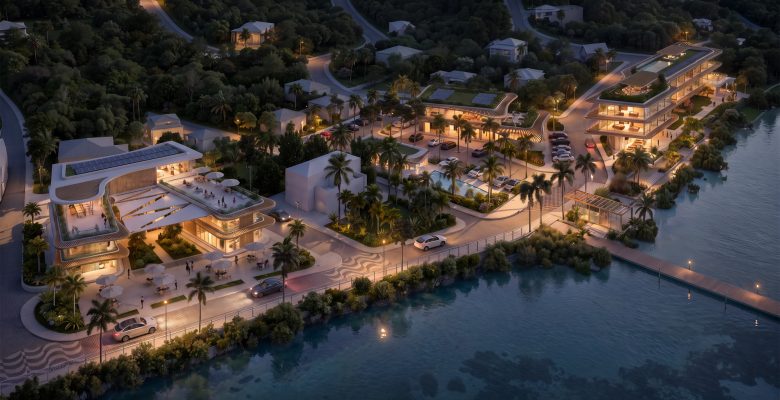
A trio of plaintiffs in St. John is suing the U.S. Army Corps of Engineers over recently approved permits for the long-planned Summer’s End Marina. The plaintiffs say that the Army Corps approved the project despite several legal issues, including expired or inadequate territorial approvals and flawed environmental-mitigation plans.
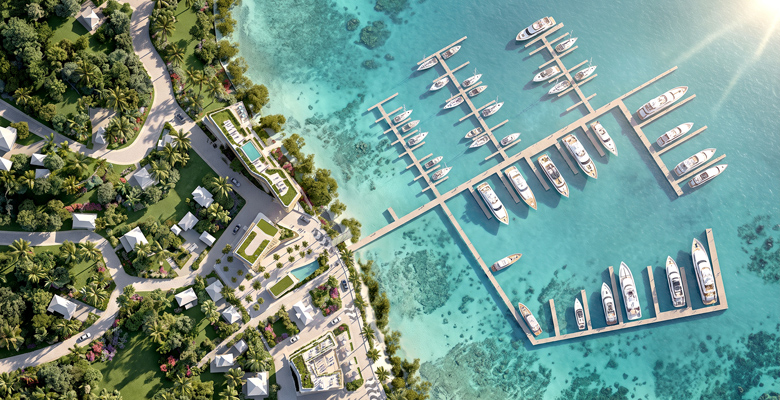
Summer’s End Marina, a.k.a. St. John Marina and Yacht Club at Summer’s End, is a proposed development from Summer’s End Group. It intends to be the first marina on the island of St. John, specifically in Coral Bay. Its plans first became public more than a decade ago. Summer’s End Group initially submitted its federal permit application in 2014, seeking to develop 145 slips for yachts and superyachts as well as related upland amenities. The proposal, including the number of berths, subsequently underwent multiple revisions through 2020. Many of the changes resulted from Army Corps requirements for it to consider approval. The plans also faced challenges in courts in the Virgin Islands and at the federal level. The review process continued into this year, with the Corps issuing a permit in April, for 115 berths and 12 additional moorings.

According to the lawsuit, the Summer’s End Marina calls for 48 megayacht-specific slips, a boardwalk, a customs and immigration office, and more. The plaintiffs include two non-profits, Save Coral Bay and the Coral Bay Community Council. The third plaintiff is David Silverman, a St. John resident. Silverman additionally is Save Coral Bay’s president as well as a Coral Bay Community Council member and former officer. Filed in the U.S. District Court of the Virgin Islands, the lawsuit is seeking a federal ruling to vacate the permits. The plaintiffs also want the court to prohibit development “if and until new and lawful approvals for the Project are issued by the Army Corps.”
One of the central arguments in the lawsuit is that the permits relied on approvals that had become invalid. Specifically, Summer’s End Group received a federal water-quality certification in October 2014 that excluded dredging and filling. Both were excluded because they weren’t included in the company’s proposal for the Summer’s End Marina. Revised applications in later years included environmental-mitigation areas needing dredging and filling. However, the lawsuit states, the Army Corps didn’t amend or reissue the water-quality certification in relation to these changes.
The lawsuit similarly challenges a Virgin Islands Coastal Zone Management (CZM) permit. In brief, any federal permit affecting land or water use or a natural resource of the coastal zone must comply with either a state’s or a territory’s own coastal-management policies. Summer’s End Group obtained a modified Virgin Islands CZM permit in December 2020, valid for one year. The lawsuit therefore says it expired in December 2021, and cites the St. John Coastal Zone Management Committee later declaring it “null and void.” The lawsuit also cites the Virgin Islands Legislature rejecting the governor’s attempt last year to extend the validity.
Yet another issue concerns environmental harm. Coral Bay is home to threatened and endangered species. In March 2015, the Environmental Protection Agency designated the waters as containing Aquatic Resources of National Importance. The plans for the marina include relocating 3,000 coral specimens, along with planting 300 red mangrove seedlings along the shoreline. They also include creating nearly an acre of seagrass as compensatory mitigation and nearly 4.6 acres of mangrove habitat restoration, enhancement, or establishment. “The construction approved by the Army Corps will directly harm, deteriorate and in some cases destroy the aesthetics, habitat and natural features of Coral Bay,” the lawsuit alleges. It further alleges that the Army Corps relied upon miscalculations in compensatory-mitigation proposals. The plaintiffs also say that the agency failed to perform independent evaluations.

Finally, the lawsuit claims, the Army Corps didn’t provide appropriate comment opportunity on some of the mitigation-plan revisions. At the same time, it claims that the Army Corps incorrectly denied public-hearing requests earlier this year for the marina. This, despite the Army Corps receiving strong pushback over the years. For example, the plaintiffs say the agency had more than 27,000 “letters, emails and comments” in opposition. The lawsuit also claims more than 7,500 petition signatures are in opposition. This, they say, contrasts with 13 letters of support for the marina development.
The Army Corps of Engineers has 60 days to file a response to the lawsuit. In the meantime, in a statement, Summer’s End Group confirms the total of 127 slips and moorings, adding that the development plans don’t require dredging of Coral Bay. The company also says it intends to break ground this fall. “We understand the significance of Coral Bay to the people who live, work, and spend time here, and we know there are strongly held views about this project,” says Chaliese Summers, managing partner of Summer’s End. “As long-time residents of St. John, our responsibility is to be transparent about what is currently planned, the environmental requirements attached to the permit, and what residents can expect from us.”
St. John Marina and Yacht Club at Summer’s End theyachtclubatsummersend.net





Leave a Reply