
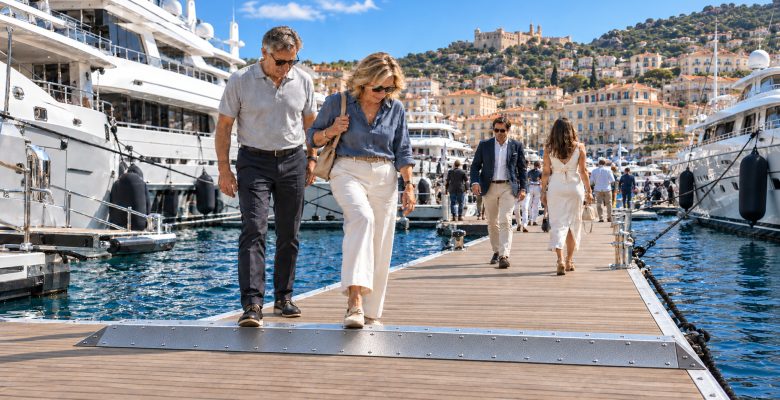
With boat-show season upon us, buyers, builders, brokers, and a host of others are planning to attend the leading events. Many clients find boat shows physically challenging, though, as our boat-show accessibility survey last year, a first in yachting, revealed. That data has already begun to influence conversations about dock stability, intra-show transportation, restroom access, and more. Since one survey isn’t enough, the now-annual assessment has gone deeper this year. After soliciting responses from more than 3,160 individuals, we found that not only is the experience difficult, but boat-show accessibility is detrimentally impacting business. In fact, it’s preventing it from happening in some cases.
We surveyed a variety of individuals, on the consumer side as well as the industry side. They included yacht buyers and owners, for example, along with brokers, designers, shipyard executives, and other exhibitors and industry professionals. All have vested interest in the success of boat shows and boat-show accessibility. In fact, in last year’s survey, more than three-quarters of industry respondents said they had met with clients within the prior five years who personally faced physical challenges or had a family member impacted by them.

To gain more immediately relevant insight this year, we asked respondents to concentrate on their experiences within the past 12 months. First, we wanted to know just how many meetings specifically take place at boat shows. It turns out, many do. Nearly one-third of respondents have attended, hosted, or arranged meetings for someone with disabilities or mobility issues. (Importantly, mobility issues, including arthritis and chronic pain, may not be readily observable.) Another 25 percent indicate family or colleagues attended the meetings.
Unfortunately, the boat-show experience is difficult for a substantial share of them. Among those with either direct experience at or knowledge of show-related meetings, 58 percent say the shows are difficult. The docks themselves are the biggest obstacles. Crowded walkways, for instance, ramps or elevation changes between docks, dock width or stability, and gaps between docks cause issues for half to more than three-quarters of these individuals.
Ultimately, these challenges have spelled problems for business at boat shows. More than half—about 60 percent—of all respondents said accessibility problems caused attendees to shorten visits, visit fewer exhibitors, move meetings off site, or avoid going. In fact, 23 percent said the issues discouraged attending.
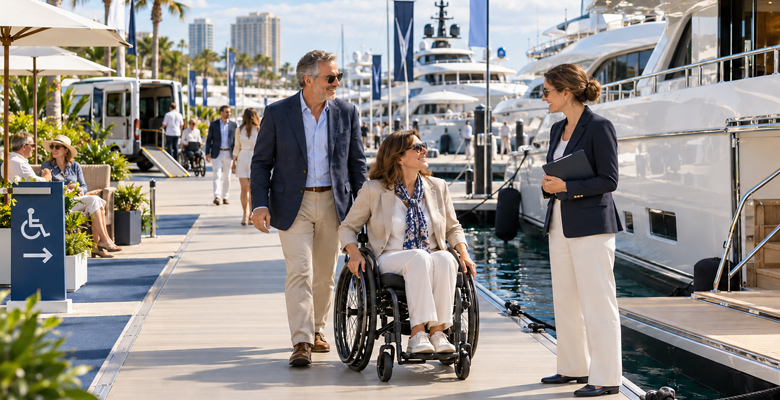
As was the case last year, however, respondents favor practical improvements. The most requested improvements are gap-free dock transitions (69 percent), wider and more stable docks (65 percent), and clearly marked accessible routes (50 percent). Related to the latter, several people commented that show personnel sometimes can’t provide accurate routing information. And, 38 percent would like to see better pre-show information online pertaining to accessibility. Additionally, 54 percent want to see accessible restrooms in every exhibit zone. Further recommendations are reservable golf carts or mobility shuttles (42 percent), more shaded seating areas (38 percent), and accessible VIP tenders and water taxis (25 percent).
Exhibitors themselves and their representatives need to be more aware, too. Lost opportunities sometimes resulted from their direct actions. For instance, one respondent says he had a mobility-impaired buyer who was denied use of a yacht’s elevator by the captain. The captain indicated it was locked down because the crew had just cleaned it. Only after a terse exchange, the responder says, did the captain relent. Another person says brokers who were gathered outside their stand were blocking access to a dock and indifferent to moving.
Megayacht News is sharing the results of the survey with boat-show organizers and industry stakeholders, to advocate for change. Several of the above-mentioned practical improvements are relatively simple to implement and will benefit all showgoers. We’re further sharing the results with non-profit organizations working with individuals with challenges, some of which simultaneously focus on boating. The goal is open doors to constructive conversations that ultimately will lead to more accessible boat shows.



Leave a Reply